
Tether Challenges Senate Report on Iran Sanctions Compliance
Tether has publicly disputed a Senate investigation that painted the stablecoin issuer as a conduit for Iran's underground financial system. In a Monday post on X, CEO Paulo Ardoino pushed back against a report released last month by Democrats on the Senate Permanent Subcommittee on Investigations, which had labeled the company a "significant financial lifeline within Iran's shadow banking network."
Ardoino's central counterargument focuses on timing. He stated that since 2023, Tether has frozen suspicious transactions on average four weeks before the U.S. Treasury Department's Office of Foreign Assets Control (OFAC) or Israel's National Bureau for Counter Terror Financing (NBCTF) formally designate the relevant addresses. He further noted that in 99% of cases, Tether froze the reported wallets before analytics firm Chainalysis even flagged them.
"Senator Blumenthal's 'analysis' of Tether's sanctions report misses that, since 2023, Tether froze on average 4 weeks prior to OFAC & NBCTF official sanction designation and for 99% of the times Tether froze the reported addresses before Chainalysis labelled them," Ardoino wrote.
The CEO went on to claim that these enforcement measures have been directly responsible for a 94% decline in Iran-linked stablecoin trading volumes.
Ardoino Speaks at DC Fintech Week, Criticizes Report Timing
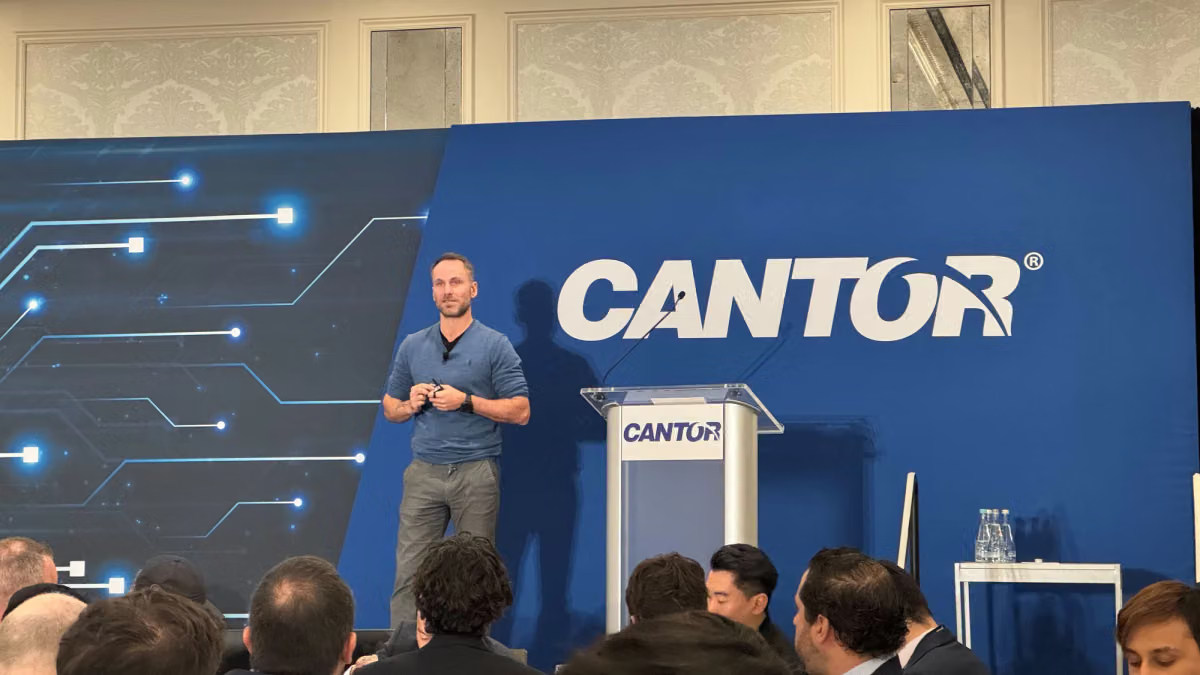
Ardoino did not limit his rebuttal to social media. Speaking remotely at DC Fintech Week in Washington last Tuesday, he addressed the senator's findings in person and raised a procedural grievance: the report was distributed to the press before Tether had an opportunity to review its contents.
"I believe it's important for the public also to hear our side of the story," he told the audience.
On the substance of the investigation, Ardoino framed Tether's role as actively removing hostile actors from the USDT ecosystem. "Our aim is to push out the bad actors from USDT," he said, adding that those actors are now migrating to payment channels outside U.S. jurisdiction and beyond Tether's reach. While acknowledging the work "is not finished," he expressed personal satisfaction with the company's compliance posture, telling the crowd: "I wake up in the morning and I look at myself in the mirror, and I know that we're doing the right thing."
Senate Report and Broader Political Context
The Senate investigation, led by top Democrat Senator Richard Blumenthal, examined a multi-year window that included the pre-2024 period, during which the subcommittee alleged Tether failed to comprehensively freeze wallets that had been flagged. The report drew a specific link to terrorism financing, stating that "terrorist organizations such as Hamas shifted from transacting in bitcoin and a mix of cryptocurrencies to promoting USDT," and characterized the perceived gap as an "absence of deterrence" that invited abuse.
The probe has since expanded beyond the Iran question. Blumenthal has been examining the relationship between Tether and its U.S. financial partner, Cantor Fitzgerald, a firm with close ties to the Trump administration. That political adjacency was further underscored last autumn when Tether appointed Bo Hines—Trump's former White House crypto adviser—as head of its U.S. division.
For crypto market participants, the political stakes are rising. Prediction market Kalshi has shown increasing odds that Democrats, including Blumenthal, will reclaim a Senate majority in the coming cycle. A return to Democratic control would grant the senator substantially greater investigative authority over digital-asset firms, a development that could reshape the regulatory landscape for stablecoin issuers operating in or near U.S. markets.
The dispute also follows a separate incident in which Tether froze approximately $344 million in USDT in connection with a U.S. operation dubbed "Economic Fury" targeting Iran's regime, underscoring the growing intersection of stablecoin infrastructure and national-security enforcement.
Related: RWA-Backed Stablecoins and Yield Dynamics
Separately, industry analysis notes that diversified real-world-asset (RWA) stablecoins are sustaining yields in the 5–7% range by backing tokens with real credit instruments, even as conventional crypto funding rates compress toward 4%. The GENIUS framework is pushing yield generation off-chain, with analysts projecting a total addressable market expanding to roughly $4 billion within three years. These developments sit at the intersection of the sanctions debate, as they highlight how stablecoin design and collateral structures influence both investor returns and regulatory exposure.