
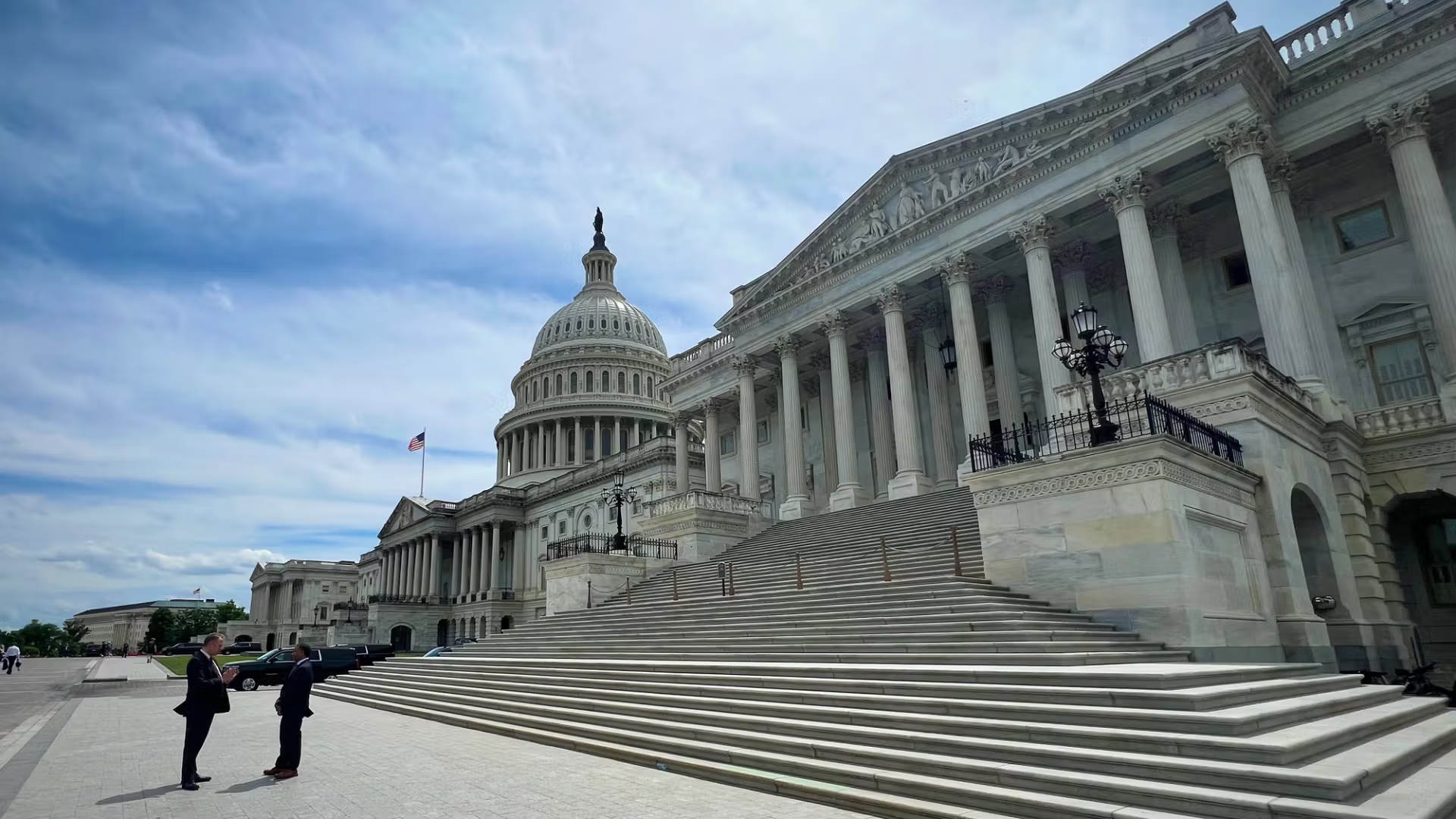
Election Outcomes Set to Shape Crypto's Regulatory Path
The United States heads into its November 3, 2026 midterm election with the crypto industry watching closely. The outcome will determine whether Republicans or Democrats hold the majority in the House of Representatives and the Senate, and that balance of power will carry direct consequences for how digital-asset firms operate in the year ahead.
The stakes extend well beyond a single policy vote. The composition of the next Congress will influence the degree of oversight applied to agencies such as the Securities and Exchange Commission, the Commodity Futures Trading Commission, the Office of the Comptroller of the Currency, and the Treasury Department. Those bodies are expected to push forward rulemaking initiatives over the coming twelve months, and Congress retains the authority to approve or reshape their budgets. The recently collapsed Clarity Act had been designed, in part, to delineate how those agencies could engage with the crypto sector, and its failure leaves a gap that lawmakers may still attempt to fill through new market-structure legislation, though the prospects remain uncertain.
Polls and Prediction Markets Favor Democrats in the House
As of Friday, October 2, 2026, roughly one month before Election Day, the polling landscape tilts toward the Democrats. A consensus aggregate on the 270toWin website indicates that the party is on track to reclaim the House, while the Senate race remains too close to call with confidence.
Prediction-market traders are reading the signals similarly. At 5:00 p.m. Eastern Time on that same Friday, users on Kalshi priced in a Democratic sweep of both chambers. Polymarket showed essentially the same expectation, with contracts implying Democrats would capture the House and the Senate alike.
Tax Legislation and Regulatory Oversight Lead the Congressional Agenda
Beyond structural questions, lawmakers are turning their attention to concrete crypto tax measures. The House Ways and Means Committee approved a bipartisan crypto tax bill last month, signaling momentum on that front. In the Senate, Steve Daines introduced his own crypto tax proposal the previous week, suggesting the issue is gaining traction across both chambers and that formal hearings are a realistic possibility.
The broader regulatory oversight role also looms large. Even as agencies draft rules, Congress will scrutinize their budget requests and, if it chooses, legislate additional guardrails. For industry players, the practical implication is that relationship-building with whichever party holds the majority will become a more pressing concern in 2027.
Industry Spending and Trump-Related Scrutiny
Campaign dollars from the crypto world have so far been relatively modest. The Fairshake Super PAC, backed by a coalition of industry companies, and the Digital Freedom Fund, financed primarily by Gemini co-founders Cameron and Tyler Winklevoss, have disclosed combined expenditures of $33 million directed at former Senator Sherrod Brown. That figure breaks down to $30 million from Fairshake and $3 million from the Winklevoss-backed fund.
However, Fairshake told CoinDesk on Wednesday that it has no additional spending to announce at this stage. With Election Day still a month out, the cost of last-minute advertising slots is expected to climb, which may limit further large-scale buys.
A separate, more volatile concern hangs over the sector: the fear that a Democratic Congress would issue aggressive subpoenas against crypto firms with close ties to President Donald Trump's personal crypto ventures. Industry executives have expressed anxiety that political retribution could target companies that benefited from the administration's favorable posture toward digital assets.
Taken together, the November vote represents one of the most consequential near-term events for the U.S. crypto ecosystem, touching regulation, taxation, oversight, and the broader political environment in which the industry must operate.