The Real Target: Feedstocks, Polymers and Fertilizer
Cable news channels open each morning with a Brent crude ticker and a tanker graphic, and by evening the talking heads confirm that oil is still moving, broadly speaking. Crude oil has become the public scoreboard for the Hormuz crisis. But as a measure of economic damage, it is the wrong metric.
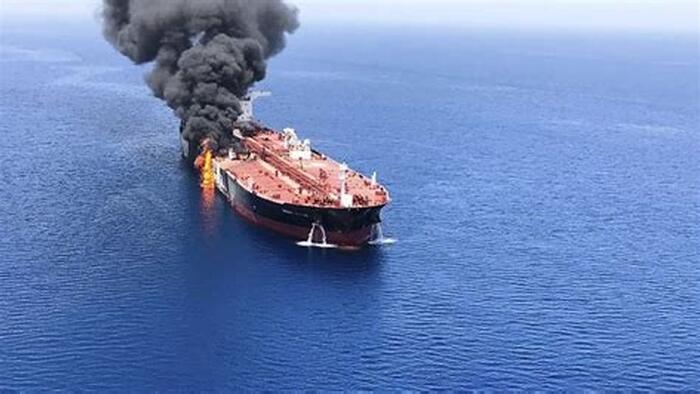
Since September 1, Iranian forces have struck approximately fifty vessels in and around the Strait of Hormuz, the vast majority of them tankers. Set against a global tanker fleet exceeding 8,000 vessels, that count looks like a statistical footnote, and Washington's messaging apparatus has been quick to emphasize precisely that. What that framing omits is that a substantial share of the cargo transiting the strait has nothing to do with crude. It is the raw material the modern industrial economy is built on: polyethylene and other plastic feedstocks, methanol for the chemical sector, and urea and ammonia for fertilizer.
The Middle East is the world's single largest exporter of polyethylene, the most widely produced plastic on Earth. In 2025 the region shipped 18.7 million tonnes out of a global total of 43.8 million tonnes, accounting for more than 40 percent of worldwide exports. ICIS estimates that roughly 84 percent of the region's polyethylene production capacity relies on the Strait of Hormuz to reach international buyers. Polypropylene and ethylene glycol, the precursor to polyester fibre and PET bottles, follow the same maritime corridor.
Before the conflict, nearly 1.2 million barrels per day of naphtha passed through the strait, satisfying 60 to 70 percent of Asia's import requirements, according to S&P Global. Asian steam crackers convert that naphtha into ethylene and propylene, the molecular building blocks behind virtually every plastic product in daily use. The Gulf also supplies the majority of the propane and butane that feed Asia's other polymer plants.
The chemical trade is equally concentrated. The Middle East exported more than 17 million tonnes of methanol in 2025. Iran alone moved well over 9 million tonnes, and roughly 70 percent of China's methanol imports originated in the region. On the fertilizer side, CRU data show that nearly one-third of global urea exports, 44 percent of sulfur exports, and almost a fifth of ammonia exports either pass through or originate west of the strait.
The Numbers: A Collapse in Chemical and Fertilizer Exports
The disruption is not theoretical. UN trade data comparing April 2026 with the same month a year earlier reveal a steep contraction across the board: Middle East methanol exports fell 80 percent, urea exports dropped 83 percent, and ammonia shipments declined 75 percent. Even polypropylene, the least-affected of the twelve commodity categories the UN tracked, slid 24 percent.
The impact has been felt hardest in Asia. Japan, South Korea and India depend heavily on imported Gulf feedstocks, and their crackers have spent the past year cutting operating rates or declaring force majeure. China's polyethylene output in April was down 8.2 percent year on year because its naphtha-fed crackers could not secure enough feedstock. S&P Global Market Intelligence estimates the disruption has removed nearly 20 percent of global ethylene capacity and as much as 40 percent of Asian naphtha supply from the market. European crackers, which also run on naphtha, are experiencing similar strain.
Prices have responded sharply. Polyethylene prices nearly doubled between the end of February and April. Dow and Celanese both raised their resin prices. Because polyethylene is embedded in grocery packaging, automotive dashboards, medical syringes and polyester textiles, the cost increase propagates quietly through the consumer economy, a few cents at a time on store shelves.
Fertilizer follows the same logic. Urea, ammonia and sulfur travel the same strait and face the same insurance arithmetic. Farmers confronting higher input costs either pass those costs onto food prices or reduce planted acreage. Either way, the end consumer pays.
Why Petrochemicals Cannot Be Rerouted Like Oil
Crude oil benefits from a suite of escape mechanisms that petrochemicals simply do not possess. Saudi Arabia can pump oil across the peninsula to the Red Sea port of Yanbu, and the UAE can pipe crude to Fujairah on the Gulf of Oman. National governments maintain strategic petroleum reserves designed precisely for this scenario. Petrochemicals have none of these buffers. There is no strategic polyethylene reserve anywhere in the world. No government stockpiles methanol as a matter of national security. The large integrated plants at Jubail, Ras Laffan and Ruwais sit on the Gulf coast and were engineered to load ocean-going vessels, not to connect to overland pipelines.
An analyst speaking to Argaam put the structural problem plainly: most petrochemical products simply cannot be rerouted the way crude can.
The financial fragility of the shipping segment compounds the problem. A VLCC carrying two million barrels of crude at current freight rates can absorb a war-risk premium running into several million dollars and still generate a profit. The smaller product tankers, chemical tankers and gas carriers that carry naphtha, methanol and LPG earn a fraction of that per voyage. Brokers observed as early as June that clean-product tankers were being deterred by insurance costs that crude carriers could simply write off. Every subsequent Iranian strike pushes those premiums higher, and the smallest, lowest-margin vessels are the first to stay in port.
Asian crackers were designed around Gulf naphtha as their primary feedstock. Some can substitute LPG, but that flexibility is limited, and the LPG itself must transit the same strait. When naphtha delivery stops, crackers cut rates or declare force majeure. S&P Global has stated the situation bluntly: naphtha has moved beyond a simple economics question, and physical availability is now the overriding concern.
One beneficiary has emerged from the chaos. American petrochemical producers, positioned along the Gulf Coast with access to cheap shale-derived feedstock, have captured a windfall as global buyers scramble for resin that does not pass through Hormuz. Quarterly earnings reports out of Houston tell that story clearly.
The Escape Hatch Under Fire and the Long Road to Recovery
Washington scored what it considered a success in September. With the U.S. Navy escorting traffic along a southern corridor hugging the Omani coast, Gulf oil flows through Hormuz recovered to more than 81 percent of prewar levels, according to Kpler data. The victory narratives were drafted.
Iran read the same numbers and intensified its campaign. The International Maritime Organization recorded 34 confirmed attacks on vessels between September 28 and October 27. On a single Sunday in October, six commercial ships were struck, the highest one-day toll since the conflict began. By mid-October, only seven tankers transited the strait in a given day, less than half the previous weekly average. The IRGC has been openly announcing, with evident satisfaction, that tankers using routes it has not approved continue to encounter mines.
The strategic logic is clear: Iran does not need to sink a single chemical tanker to strangulate the trade. It only needs to make each transit risky enough that owners of small, low-margin vessels keep their ships in port. Crude can limp through under naval escort; naphtha, methanol and polymers ride on the vessels least able to bear the added risk.
Aramco chief executive Amin Nasser laid out the broader picture in London on October 5. He said the world entered the crisis with almost 10 billion barrels of oil in commercial storage and has since lost nearly 3 billion barrels of supply, roughly half of what would normally have moved through Hormuz. Fewer than 6 billion barrels of commercial inventory remain, and most of that stock is not practically available, he added. His verdict: "Until Hormuz fully re-opens and confidence returns, the crude reality is that pressure at both ends of the barrel will intensify. Even then, replenishing inventories while meeting demand could take up to two years." He repeated the warning in Riyadh a week later.
The conditions attached to that timeline matter. The two-year recovery clock starts only after the strait fully reopens and market confidence is restored. Every subsequent Iranian strike pushes that starting line further into the future.
And Nasser was speaking about crude, the commodity with every structural advantage: strategic reserves to draw upon, a 7-million-barrel-per-day East-West pipeline to Yanbu, and a Saudi upstream that he says remains fully operational. Petrochemicals possess none of those cushions. There is no strategic naphtha or methanol reserve to refill. The plants that produce them sit on the Gulf coast with no pipeline bypassing the strait. If the best-protected commodity in the region requires two years to normalize after the shooting stops, the outlook for polyethylene and methanol is considerably worse.
That one remaining escape hatch is itself under attack. The East-West pipeline is currently moving about 4 million barrels per day of Saudi crude to Yanbu, roughly 4 percent of global supply, and it is the principal reason Saudi Arabia has avoided the fate of its neighbors. The Houthis know this. On Thursday they claimed strikes on a pumping station along the pipeline, the oil facility at Yanbu, and an Aramco building in Riyadh. On Friday they claimed a second pumping station along with King Khalid International Airport in the capital. Sources indicate pumping station 11 was destroyed. Riyadh, as is its custom, has confirmed nothing.
This is not the first incident. In September, attacks on the pipeline ignited fires at three pumping stations, and Saudi Arabia shut down the entire line as a precaution before rigging bypass routes. The pipeline comprises 13 pumping stations, and each one lost reduces the volume of crude reaching the Red Sea. The single alternative route Nasser credited with keeping Brent away from $200 is being dismantled one station at a time. Two years was the optimistic scenario, and it assumed the bypass would hold.
The planners who authorized this conflict modeled for oil. They had the strategic petroleum reserve, a naval escort plan, and pipeline workarounds. What they apparently failed to model is that the Persian Gulf is also one of the world's great chemical manufacturing hubs, and that its output has no pipeline, no strategic reserve, and no naval escort sized to protect a fleet of small, under-insured vessels.
Iran understood this asymmetry. Its tanker campaign does not have to achieve dominance at sea. It only has to keep the strait dangerous enough, for long enough, for the world to run short of the products made from what passes through it. Each strike resets the insurance clock and keeps the smaller vessels away for another month.
The next time a Washington official assures the public that oil is still flowing, the more relevant question is about the naphtha, the methanol and the polyethylene. Then check the price of a pack of diapers at the local supermarket. That is where this war is being decided.