
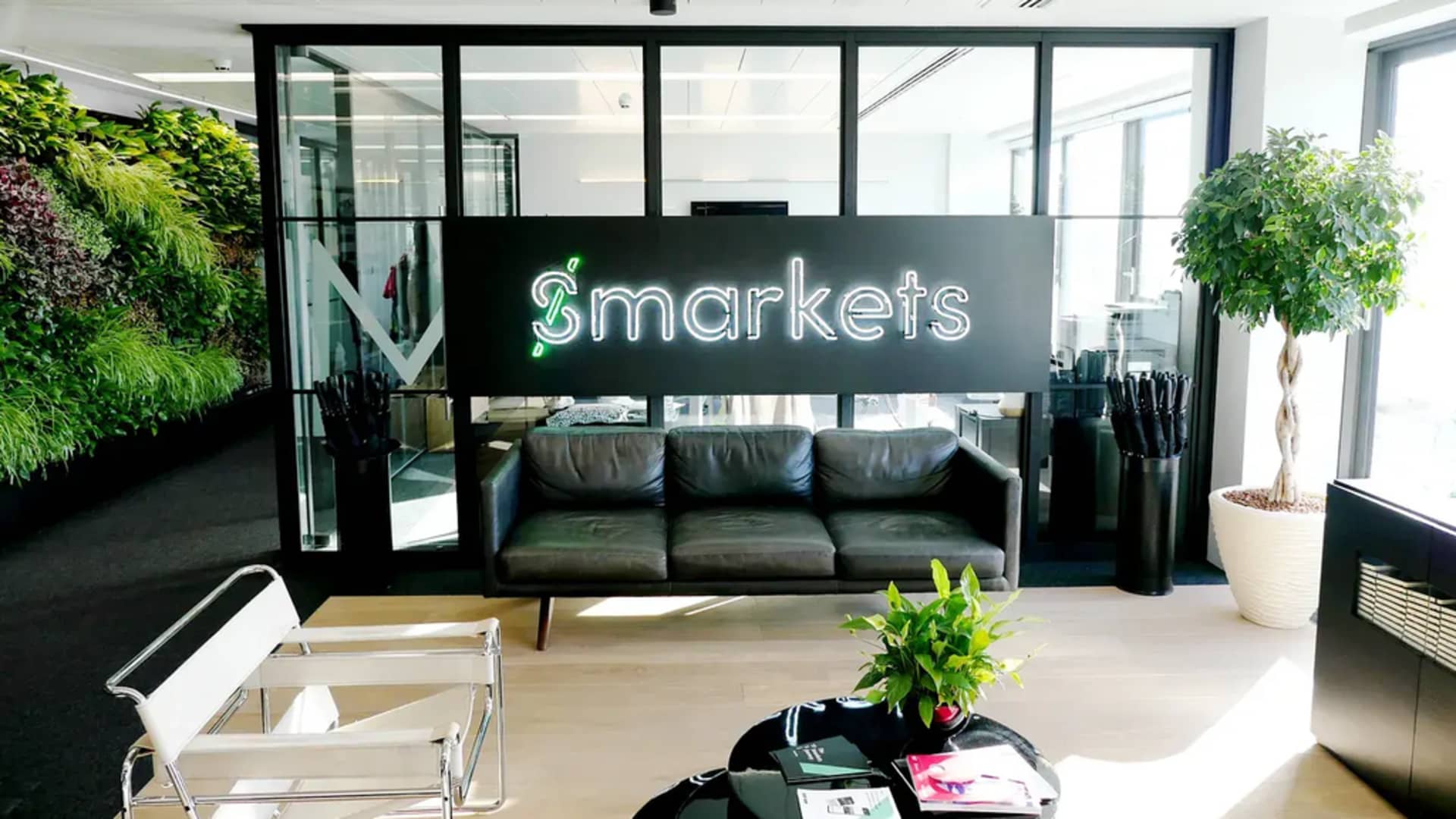
Smarkets Eyes U.S. Expansion Through Dual Regulatory Pathways
Smarkets, a London‑based betting exchange founded in 2008, is making a concerted push into the United States by pursuing two distinct regulatory tracks. The firm filed for a Commodity Futures Trading Commission (CFTC) license in March and is also applying for sportsbook authorisations in Illinois, Iowa and Michigan, according to founder Jason Trost.
The exchange has amassed more than $60 billion in lifetime trading volume, a figure that underscores the scale of its operations. Trost explained that the company’s dual strategy stems from uncertainty over whether the CFTC holds federal pre‑emption over sports‑related contracts, which would preclude states from imposing their own rules.
“The reason we’re doing the dual track is because the legal situation is unclear if the CFTC has federal preemption or not,” Trost said.
Smarkets notes that sports betting drives a substantial portion of its trading volume, aligning its interests with those of traditional sportsbooks.
Regulatory Landscape: CFTC vs State Sportsbook Licenses
A growing number of U.S. states have begun to classify prediction‑market platforms as illegal gambling operators. In response, the CFTC has taken a proactive stance, suing several states to block attempts to regulate the industry. Last month, 44 state attorneys general filed a joint letter arguing that the federal agency cannot be the exclusive regulator of sports‑related event contracts on exchanges.
Kalshi, another prediction‑market platform, dismissed New York’s lawsuit as “political theatre,” insisting that a federally licensed exchange cannot be shut down by a single state without harming consumers.
“States can’t just shut down a federally licensed exchange. This would also just hurt New Yorkers, who would be driven offshore,” Kalshi said.
In an effort to navigate the fragmented regulatory environment, Smarkets has applied for sportsbook licences in Illinois and Michigan—states that have explicitly categorized prediction markets as unlicensed sports‑betting operators. The company already operates as a sportsbook in Indiana.
Trost prefers a federal regulatory framework and believes sports‑event contracts should be treated as swaps under the CFTC’s jurisdiction.
“We view it more as a hedge rather than we want to be active on a state level. You know, our preference is to be active on the federal level,” Trost said.
State‑Level Challenges and Federal Pushback
The tug‑of‑war over regulatory authority has forced Smarkets to confront each state’s specific compliance and tax requirements. The company has highlighted the high compliance costs associated with operating as a sportsbook in multiple jurisdictions.
Despite these hurdles, Trost remains optimistic about positioning Smarkets as a “good actor” in the industry.
“I’m willing to take the rough terrain and make Smarkets a leading good actor in the business,” Trost said.
He cited the company’s experience in four European markets—Ireland, Malta, Sweden and the United Kingdom—as evidence of its ability to navigate diverse regulatory landscapes.
Trost also warned that competitors who do not adhere strictly to regulation could tarnish the reputation of the entire sector.
“Some of my competitors are in danger of ruining the reputation of this industry because I think they're acting irresponsibly and not following regulation closely enough,” he said.
Industry Context: Other Operators Entering Prediction Markets
Smarkets is not alone in pursuing a dual‑track strategy. Major sports‑betting platforms such as DraftKings and FanDuel launched prediction‑market offerings late last year. During a recent earnings call, Flutter, FanDuel’s parent company, noted that its prediction‑market platform can attract customers more quickly in states where sportsbooks remain under regulatory scrutiny.
Conclusion
Smarkets’ simultaneous pursuit of a CFTC licence and state‑level sportsbook authorisations reflects the broader uncertainty surrounding the regulatory status of prediction markets in the United States. By positioning itself as a compliant operator under federal oversight, the company hopes to avoid the pitfalls that have beset some of its competitors and to establish a stable presence in the growing U.S. betting market.
Source: CNBC Markets