
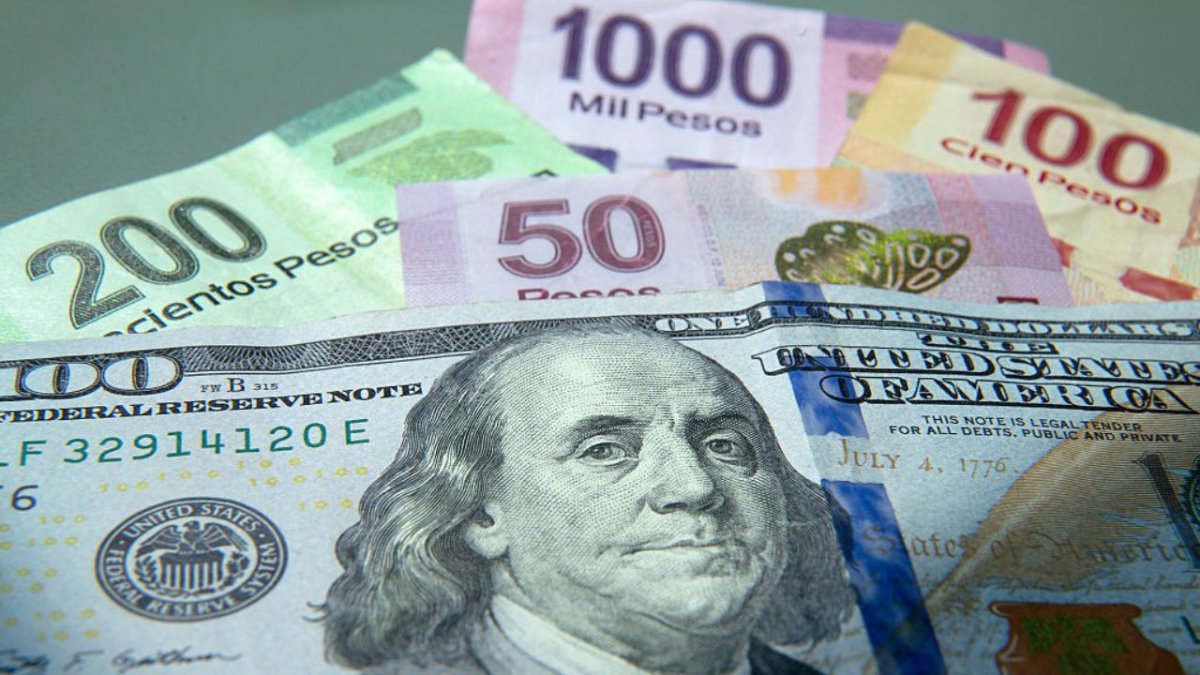
The Mexican peso has stubbornly defended its recent gains, keeping the USD/MXN pair near its lowest level of 2024 even after a brief rally in the U.S. dollar triggered by Washington’s latest sanctions on Iran. At the time of writing, the exchange rate hovers around 16.91, having slipped below the 17.00 threshold last week and fallen sharply from roughly 17.60 in early July.
Resilience Amidst Rising Inflation and New Sanctions
Monday presented two potential headwinds for the peso. Mexico’s latest inflation data revealed that headline inflation rose to 3.26 % in the first half of August, up from 3.10 % a month earlier, while the U.S. dollar gained after the U.S. Treasury announced expanded secondary sanctions against nations that continue to trade with Iran. The sanctions lifted the dollar index by about 0.17 % to 98.99, yet this uptick did not translate into a significant reversal for USD/MXN.
Geopolitical Catalyst and Market Dynamics
The announcement by Treasury Secretary Scott Bessent added a new geopolitical dimension to the currency’s outlook. Although the broader dollar recovered, the pair stayed below 17.00, suggesting that demand for the peso remains comparatively robust. Global markets reacted cautiously that day: technology shares fell, and gold surged to a three‑month high as investors sought safe‑haven assets.
Mixed Inflation Signals for Mexico
The headline inflation figure of 3.26 % fell short of the roughly 3.30 % forecast by economists, but it still sits within Banco de México’s target band of 3 % ± 1 %. More importantly, core inflation eased to 3.93 % from 3.95 %, contrary to expectations of a rise to about 3.99 %. This divergence between headline and core readings offers little evidence of a sudden, widespread acceleration in underlying price pressures, leaving monetary policy expectations largely unchanged.
Interest‑Rate Differentials and Economic Growth
Banco de México kept its benchmark rate steady at 6.5 % earlier this month, with minutes from the meeting indicating that the central bank may hold the rate for an extended period amid persistent inflation risks. The relatively high yield continues to underpin the peso. Meanwhile, revised GDP data for Q2 showed a 1.4 % quarter‑over‑quarter expansion—the strongest quarterly growth since early 2022—and a 2.1 % year‑over‑year increase.
Implications for USD/MXN Forecast
The combination of solid growth and a high policy rate reduces the likelihood of immediate monetary easing, while the U.S. dollar’s inability to sustain momentum keeps sellers in control of USD/MXN. However, the confluence of a stronger dollar demand and increasingly stretched technical conditions could raise the possibility of a short‑term rebound for the pair.
Technical Analysis and Short‑Term Targets
The daily chart continues to paint a consistently bearish picture for USD/MXN. Since peaking around 17.60 in July, the pair has been carving a series of lower highs and lower lows. The slide accelerated in August, pushing the exchange rate below 17.20 and ultimately erasing the psychologically significant 17.00 barrier. Today’s level hovers near 16.91.
Momentum gauges still favour sellers. The MACD line remains beneath both its signal line and the zero axis, confirming a prevailing downtrend. Nevertheless, a noteworthy shift is occurring beneath the surface: the negative MACD histogram is gradually shrinking, hinting that bearish momentum may be softening even as new lows are forged. This subtle change sets up a critical zone around 16.90.
A clean daily dip below 16.90 would strengthen the bearish structure and expose 16.80 as the next probable target. From there, the 2024 trading range points to 16.60 as a further area of interest. On the flip side, bulls would first need to lift USD/MXN above 17.00. A sustained rally past that mark could trigger a larger corrective swing toward 17.10, and subsequently the more robust 17.20–17.30 resistance band.
Current Outlook
Despite a modest rebound in the U.S. dollar following Washington’s latest sanctions against Iran, the pair remains anchored near the two‑year low of 16.90. The peso’s muted reaction to Mexico’s most recent inflation figures—headline inflation at 3.26% and core inflation easing to 3.93% in the first half of August—suggests that the broader downtrend is still intact. Yet, after the sharp fall below 17.00, the downward pressure is beginning to ease.
A break below 16.90 could unlock a further decline to 16.80, while a recovery above 17.00 would signal the start of a short‑term correction. For now, 16.90 remains the pivotal level in the USD/MXN price forecast.
Drivers of Peso Strength
The Mexican peso has benefited from comparatively high domestic interest rates and resilient economic data, while the U.S. dollar remains under strain. Should the pair continue to break below 16.90 and dollar weakness persist, the peso could sustain its gains. However, the exchange rate is approaching historically significant territory, and the momentum indicators hint at a moderation in selling pressure, leaving room for a brief rebound even within an overall bearish trend.
In summary, the USD/MXN pair is poised at a crossroads: a further dip below 16.90 could deepen the decline, whereas a rebound past 17.00 may herald a temporary corrective phase. Market participants will watch these key thresholds closely as the pair navigates the confluence of technical signals, monetary policy stances, and geopolitical developments.