
The Rise and Re‑orientation of Crypto Mining Hubs
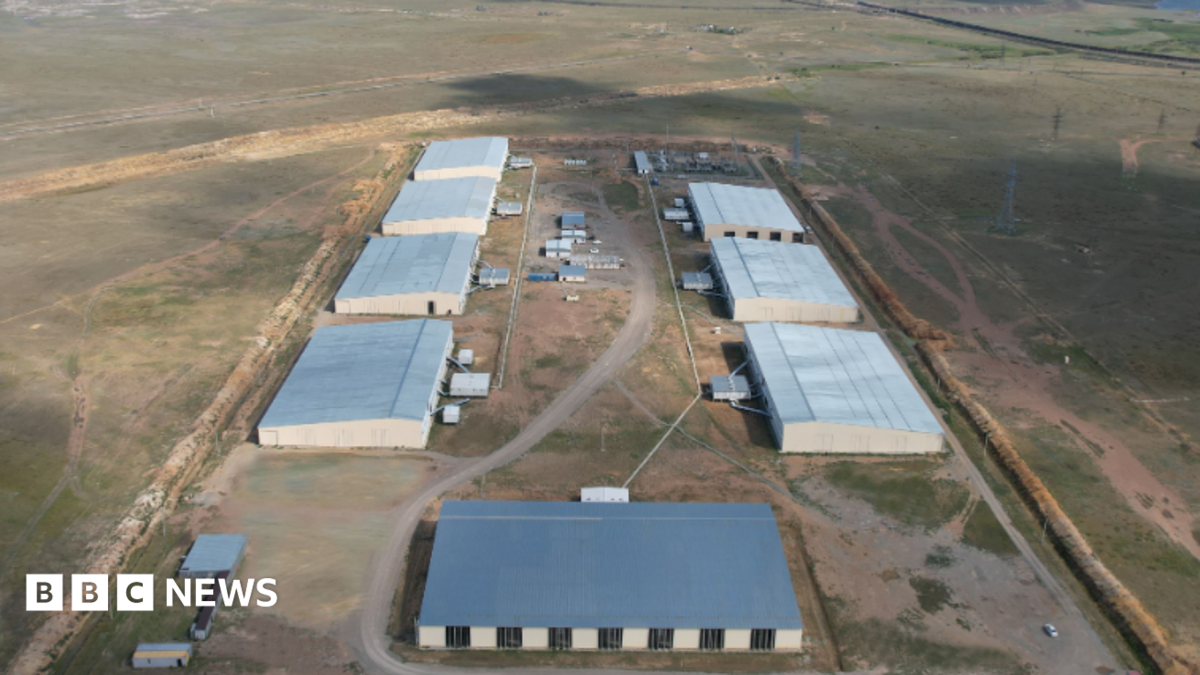
When Kazakhstan’s Ekibastuz Bitcoin mine opened its doors in 2020, it was heralded as a landmark for the burgeoning crypto market. Yet a decade of volatility has forced many of the sector’s largest players to rethink their business models. The once‑glorious era of mining—where vast arrays of specialised GPUs and ASICs were rewarded with freshly minted coins—now faces a stark reality: the reward curve is flattening, and the market price of Bitcoin has slipped from its October 2025 peak.
At its zenith, one Bitcoin fetched roughly $124,000 (about £91,000). Today, the cryptocurrency has rebounded to around $80,000, representing an almost 30 % rise for August, but the figure still falls short of the high that many mining‑based firms once banked on.
Why the Shift to AI?
Bitcoin’s mining process mirrors the computational demands of advanced AI systems: both rely on enormous, distributed networks of powerful processors housed in data centres. While Bitcoin miners validate transactions and secure the network in exchange for new coins, AI workloads—particularly those used by large language model developers—require sustained, high‑throughput compute power.
Industry analysts point out that mining firms possess a unique skill set: they have long experience locating cheap electricity and operating massive, energy‑intensive facilities. This expertise makes them attractive partners for AI and high‑performance computing (HPC) providers looking to expand their infrastructure footprint.
Major Players and New Partnerships
- Riot Platforms inked a $9 billion, 20‑year compute contract with Anthropic earlier this month, signalling a substantial commitment to AI workloads.
- Bitdeer, which claims to be the world’s largest Bitcoin miner, announced a 16‑year compute lease for Anthropic, while its chief strategy officer, Haris Basit, emphasised a dual‑purpose model that keeps mining operations active.
- Other firms—TerraWulf, Ionic Digital, Core Scientific, Iris Energy, Hut 8, and Enegix—are reallocating resources from Bitcoin mining to AI. TerraWulf, for instance, has rebranded its website from a “bitcoin mining company” to a focus on “next‑generation AI and high‑performance computing.”
- Applied Blockchain has renamed itself Applied Digital to reflect this strategic shift.
Enegix’s CEO, Yerbolsyn Sarsenov, stated, “Today, we are moving confidently toward artificial intelligence and planning the gradual alignment of our energy and infrastructure capabilities, both in Kazakhstan and elsewhere, toward the development of AI infrastructure.” The company is actively negotiating with AI and HPC firms and aims to convert a significant portion of its business to AI services.
The Cost of Conversion
Transitioning a crypto mine to an AI data centre is not cheap. In some cases, firms have had to liquidate Bitcoin holdings to finance the refit. Even as Bitcoin’s price has shown a recent uptick, many companies feel that the shift is irreversible. Wolfie Zhao of The Energy Mag notes, “Once that multi‑gigawatt power infrastructure has been retrofitted to AI or HPC colocation, there is no turning back.” He added that while miners can disconnect from the Bitcoin network at will, long‑term GPU colocation leases lock firms into a new revenue model.
Implications for Bitcoin’s Security and the Broader Market
Zhao also addressed concerns about the potential impact on Bitcoin’s security. He expressed optimism that a new wave of miners might enter the market as conditions improve, but warned that the biggest players would find it difficult to revert to mining once their facilities are repurposed.
Haris Basit of Bitdeer, meanwhile, maintains that mining remains viable in a hybrid approach. He said, “Bitcoin mining is particularly well suited to that model because it is flexible and interruptible, while AI workloads can provide longer‑duration contracted revenues.”
Looking Ahead
The trend is expected to continue even if Bitcoin’s price rebounds. As the cryptocurrency market stabilises, the infrastructure built for mining may become a backbone for AI research and commercial applications. The shift underscores a broader transformation within the crypto industry, where energy‑hungry operations are being repurposed to serve the rapidly expanding field of artificial intelligence.
Frequently Asked Questions
What drives the decline in Bitcoin mining profitability?
Bitcoin’s reward schedule is programmed to halve every four years, reducing the number of coins miners receive. Coupled with a drop in coin price, the overall profitability of mining has diminished, prompting firms to seek alternative revenue streams.
Are these moves a sign of Bitcoin’s decline?
While the shift reflects current market conditions, many analysts believe Bitcoin will remain a foundational asset. The pivot to AI does not necessarily indicate a permanent retreat from mining but rather a diversification strategy.
How will this affect crypto miners’ future?
Miners that successfully convert their infrastructure may secure stable, long‑term contracts with AI firms. However, those that cannot adapt may face financial strain or exit the market entirely.