
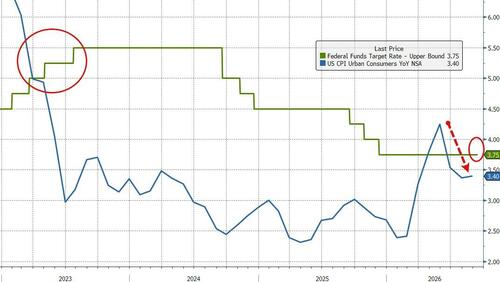
The Decision and Warsh's Post-Meeting Address
Federal Reserve Chairman Kevin Warsh took to the podium after the central bank voted to raise its benchmark interest rate by 25 basis points. The move, announced in the Fed's latest monetary policy decision, prompted Warsh to deliver a news conference in which he walked through the rationale behind the increase and outlined the committee's forward-looking stance.
For currency markets, a 25-basis-point hike represents a concrete shift in the U.S. monetary policy trajectory. Warsh's remarks, broadcast live and covered by Bloomberg Markets among other outlets, were dissected by traders for clues on whether further tightening is on the horizon or whether the committee intends to pause after this step.
What the Hike Means for Forex Positioning
A rate lift at the U.S. central bank typically adds upward pressure on the dollar relative to major and emerging-market currencies, as higher yields make dollar-denominated assets more attractive to carry-trade participants. The 25-basis-point move, while modest, confirms a hawkish tilt that can reshape positioning across EUR/USD, GBP/USD, and USD/JPY pairs within the same trading session.
For traders active in the forex space, the key takeaway from Warsh's conference is the tone and context surrounding the decision. Even a single quarter-point increase can trigger re-pricing of federal funds futures and, by extension, shift the expected path of U.S. short-term rates that underpin currency valuation models. Traders should be alert to any language suggesting the committee sees inflation pressures as persistent, as that would imply additional hikes and further dollar support.
Conversely, if Warsh's remarks lean toward a one-off adjustment with a subsequent pause, the initial dollar bid could fade, allowing non-U.S. currencies to recover. The distinction between a single hike and the beginning of a tightening cycle is the dividing line that will drive volatility in the weeks ahead.
Key Takeaways for Currency Traders
- The 25-basis-point increase is now priced into the policy baseline; the market's attention shifts to the cadence of future decisions.
- Warsh's framing of the hike — whether reactive to inflation data or precautionary — will influence how aggressively traders adjust dollar positions.
- Volatility is likely to remain elevated in the immediate post-conference window as algorithms and discretionary desks recalibrate around the new rate level.
Traders are advised to monitor upcoming economic data releases and any follow-up commentary from Fed officials to gauge whether the 25-basis-point move marks the start of a sustained tightening cycle or a measured, single-step adjustment.