
Broad Market Retreat Amid Inflation Jitters
US equity indexes closed lower on Wednesday (September 9, 2026), extending a two-day losing streak driven by growing worries about inflation. The S&P 500 shed 0.48%, the Dow Jones Industrial Average dropped 0.77% to a five-week low, and the Nasdaq 100 slipped 0.29%. Futures tracked the same direction, with E-mini S&P contracts (ESU26) down 0.46% and September-dated E-mini Nasdaq contracts (NQU26) off 0.30%.
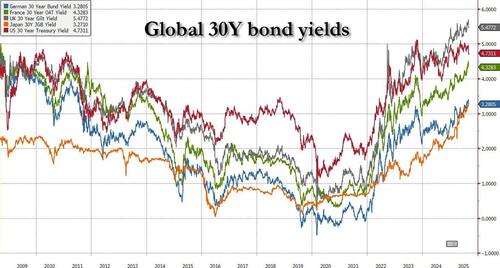
The primary headwind was a sharp jump in energy prices. West Texas Intermediate crude oil climbed more than 3% to a 3.25-month high, stoked by intensifying military hostilities in the Middle East and fears over the security of energy shipments transiting the Strait of Hormuz. The oil rally has fanned inflation expectations, which in turn pushed government bond yields higher and applied direct pressure on equity valuations. The 10-year US Treasury note yield edged up to 4.85%, the highest reading in roughly 2.75 years.
On the constructive side, semiconductor and AI-infrastructure names bucked the broader decline, while energy producers and service companies rose on the strength of crude prices.
Geopolitical Shock and the Bond Market Response
The oil spike was triggered by a dramatic escalation in the US-Iran conflict. Washington announced that it had destroyed five Iranian tankers loaded with crude after two separate Iranian attempts to strike US Navy vessels with ballistic missiles. Tehran retaliated by launching missiles at a US air base in Jordan and issuing a warning to commercial shipping in the Persian Gulf that vessels would come under attack. Iranian officials further stated on Wednesday that the country is prepared for a more intense war and will escalate its counterstrikes should the United States continue targeting Iranian territory and infrastructure.
In the fixed-income market, December-dated 10-year Treasury futures (ZNZ6) closed 7.5 ticks lower. The 10-year yield rose 4.5 basis points to 4.833% on a futures basis, while the cash yield touched 4.853%, a 2.75-year peak. The futures contract also printed a 20-month low.
Pressure on Treasuries intensified after the US Treasury Department announced a buyback program for up to $6 billion in longer-dated government debt, a figure well below the $10 billion that market participants had anticipated. However, selling momentum eased later in the session when strong demand emerged for a $39 billion auction of 10-year notes. The deal posted a bid-to-cover ratio of 2.71, comfortably above the 2.49 average across the prior ten auctions.
European sovereign yields followed a similar upward trajectory. The 10-year German bund yield climbed 7.8 basis points to a fresh 15-year high of 3.444%, while the 10-year UK gilt yield added 8.8 basis points to reach 5.261%. In France, July manufacturing output unexpectedly contracted 0.8% month over month, missing forecasts of a 0.4% increase.
Looking ahead, traders are pricing in a 100% probability that the European Central Bank will deliver a 25-basis-point rate hike at its Thursday policy meeting. In the US, the market is assigning a 61% chance of a 25-basis-point Fed rate increase at the September 15–16 FOMC session.
Trade Friction and Housing Data Add to Headwinds
Beyond the geopolitical shock, the escalating trade dispute between the United States and Canada is clouding market sentiment. On Tuesday, Ottawa imposed tariffs ranging from 15% to 50% on hundreds of American goods in direct retaliation for Washington's move last month to levy 50% duties on approximately $20 billion worth of Canadian imports. The US government responded by working to block the entry of certain Canadian products, layering on additional tariffs, and pursuing measures to prevent Canadian firms from selling to US government contractors.
On the housing front, data from the US Mortgage Bankers Association showed total mortgage applications falling 2.7% for the week ending September 4. The purchase sub-index declined 0.2%, while the refinancing sub-index dropped 6.2%. The average 30-year fixed-rate mortgage rose six basis points to 6.85%, up from 6.79% the prior week and marking a 14-month high.
Sector and Individual Stock Movers
Telecommunications and Cable: The group lagged the broader market. Comcast (CMCSA) tumbled 6%, topping the list of Nasdaq 100 decliners after CFO Armstrong indicated he sees no near-term improvement in third-quarter broadband subscriber losses. Charter Communications (CHTR) shed more than 8%, while Verizon (VZ) and AT&T (T) both closed down over 1%.
Semiconductors and AI Infrastructure: Chip names provided a notable offset to the day's losses. Marvell Technology (MRVL) advanced more than 4%, AMD gained over 3%, and Micron Technology (MU) rose above 2%. ARM Holdings (ARM), Western Digital (WDC), SanDisk (SNDK), Intel (INTC), Texas Instruments (TXN), and Qualcomm (QCOM) all finished higher by more than 1%.
Energy: Producers and service companies rallied in tandem with crude. APA Corp (APA) and ExxonMobil (XOM) each climbed more than 2%. Chevron (CVX), Devon Energy (DVN), Diamondback Energy (FANG), Occidental Petroleum (OXY), ConocoPhillips (COP), and Valero Energy (VLO) all added more than 1%.
Notable Decliners:
- ServiceTitan (TTAN) plunged more than 29% after posting a Q2 EPS loss of 26 cents, worse than the 25-cent consensus estimate.
- Casy's General Stores (CASY) dropped over 14%, leading S&P 500 losers, after reporting a Q1 gross margin of 21.8% versus a 22.3% consensus expectation.
- Chewy (CHWY) fell more than 10% after guiding to a sequential decline in Q3 gross margin, attributing it to a timing shift that moved certain rebate benefits from the second half of the year into Q2.
- Smithfield Foods (SFD) slid more than 6% after trimming its Q3 earnings outlook, citing continued compression in the fresh pork market spread and lower hog prices.
- Dyne Therapeutics (DYN) dropped more than 5% following a JPMorgan Chase downgrade to underweight from neutral, with a price target set at $10.
- Booking Holdings (BKNG) retreated more than 3% after an EU court ruled against the company in its bid to acquire Sweden's Etraveli Group, with the judge affirming that regulators were correct in finding the transaction threatened fair competition.
Notable Gainers:
- Chime Financial (CHYM) surged over 7% after raising its full-year revenue guidance to $2.76 billion–$2.77 billion, up from the prior range of $2.73 billion–$2.75 billion and above the $2.74 billion consensus.
- Meta Platforms (META) jumped more than 6% after analysts published favorable commentary on the debut of Muse, the company's new AI assistant.
- HP Inc (HPQ) rose over 3% on the announcement of a partnership with Red Hat focused on an AI platform.
- Sysco (SYY) gained more than 2% after lifting its mid-term financial targets for fiscal years 2028 and 2029 to annualized net sales growth of 4%–7%, up from the previous 4%–6% range.
International Markets and Ahead
Overseas equities delivered mixed results on Wednesday. The Euro Stoxx 50 slid 1.58% to a five-week low, while China's Shanghai Composite edged up 0.28% and Japan's Nikkei-225 declined 0.19%.
On the earnings calendar, Adobe (ADBE), Copart (CPRT), Macy's (M), and Oracle (ORCL) are scheduled to report results on Thursday, September 10, 2026.