
Equities Retreat Across Asian Exchanges
Asian equity markets closed lower on the session, mirroring the weakness already evident in U.S. listings. Investors who had been watching Wall Street through the morning saw familiar selling pressure carry over into Tokyo, Seoul, Shanghai, and other regional hubs. The broad-based decline underscored how closely Asian indices are tethered to American risk appetite, and how quickly sentiment can shift when macroeconomic signals turn hawkish.
Crude Oil Above $101 Feeds Inflation Anxiety
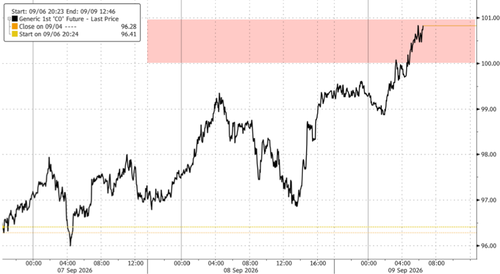
The primary catalyst behind the risk-off tone was the continued upward trajectory in energy prices. Brent crude extended its rally, trading above the $101-per-barrel mark, a level that has historically prompted central banks and equity strategists to revisit their inflation outlooks. For stockholders, sustained oil costs above this threshold raise the spectre of broader price pressures across transportation, manufacturing, and consumer goods — all of which can erode corporate margins and consumer spending simultaneously.
The market's reaction was telling: rather than treating the oil move as a one-off supply shock, participants priced in the possibility of a more entrenched inflation cycle. That interpretation helped explain why equity valuations came under pressure even in the absence of new earnings data or policy announcements.
Rising Treasury Yields Compound the Sell-Off
Adding to the headwinds, U.S. Treasury yields climbed during the session. Higher bond yields have a dual effect on equities: they lift the discount rate applied to future corporate cash flows, making growth stocks particularly vulnerable, and they make fixed-income alternatives more attractive relative to riskier assets. For investors positioned in Asian markets, the stronger dollar that often accompanies rising U.S. yields can also weigh on regional currencies, importing additional inflation and complicating local central-bank decisions.
Outlook for Traders
The combination of oil above $101, elevated Treasury yields, and a同步 decline in U.S. equities created a challenging environment for Asian stock pickers. Traders should note that the session's moves were driven by macroeconomic forces rather than company-specific news, meaning that positioning adjustments may need to be re-evaluated as energy prices and yield curves evolve over the coming days. Until oil stabilises or yields roll over, the inflation-overrides-growth narrative is likely to remain a dominant theme across both Western and Asian equity markets.