
A Missed Opportunity for Digital Assets
The cryptocurrency industry has failed to capitalize on what many in the sector viewed as a once-in-a-generation chance to embed digital assets into the fabric of mainstream finance. Rather than riding that wave into broad institutional and retail acceptance, the broader crypto market watched the window close, and the aftermath has been less about forward-looking strategy and more about assigning responsibility.
The tone across the sector has shifted from optimistic growth narratives to a pointed blame game. Industry participants, analysts, and investors are debating who bears the greatest share of responsibility for squandering the moment—regulators, exchanges, token issuers, or the sector's own leadership.
Armstrong and the Prolonged Fight Over Mainstream Adoption
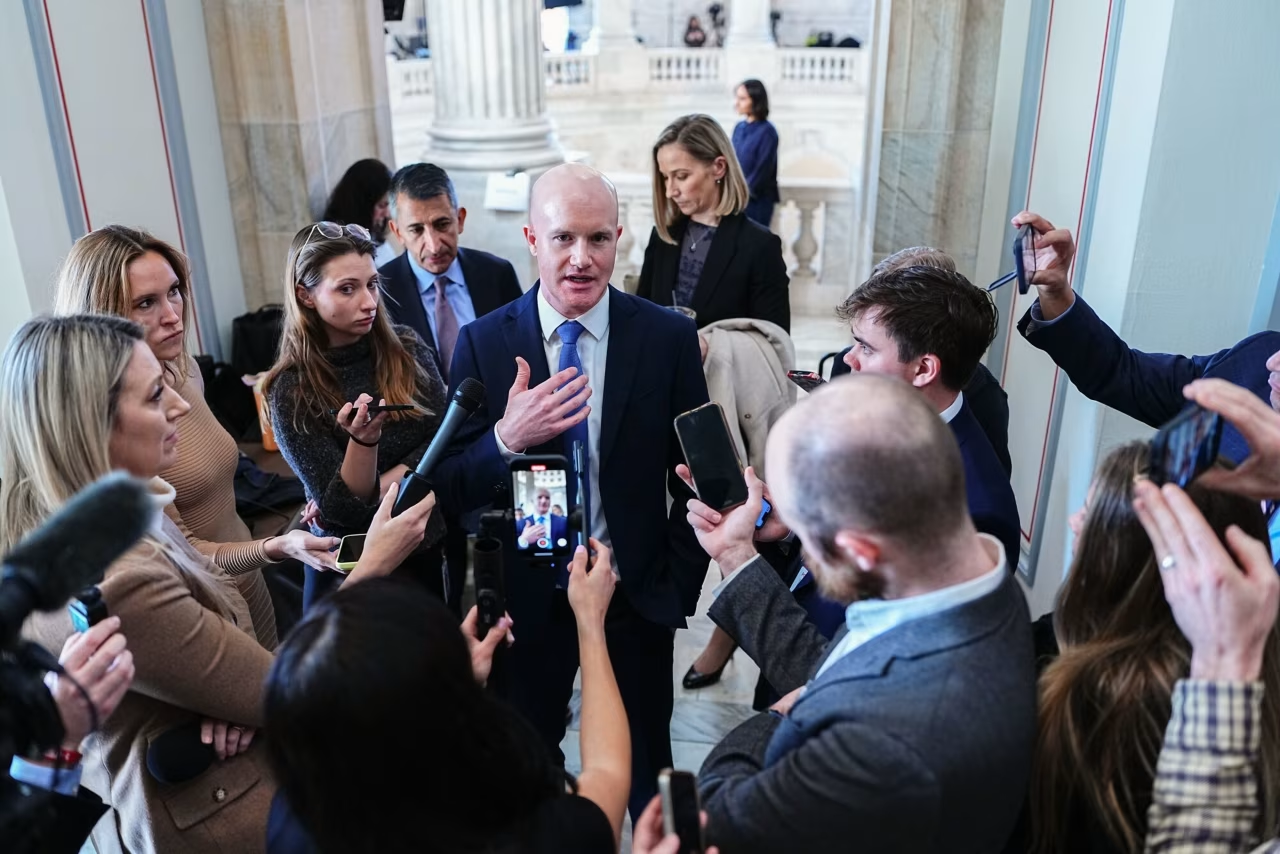
At the center of that dispute stands Brian Armstrong, the chief executive of Coinbase. Armstrong found himself at the focal point of a long-running and high-stakes battle over where digital assets fit within the broader financial system. The fight was not a single regulatory hearing or a one-off policy clash; it was a protracted contest that stretched across multiple fronts and involved significant legal, political, and commercial stakes.
Armstrong's position placed him in direct opposition to forces questioning the legitimacy and regulatory footing of digital asset exchanges. The outcome of that confrontation shaped how the wider market perceived the viability of crypto as a mainstream financial category. For many observers, the way the dispute unfolded—and ultimately resolved—determined whether the sector would be integrated into existing financial infrastructure or remain in a peripheral, speculative niche.
Implications for Crypto Traders and Investors
For traders and investors operating in the crypto space, the fallout carries practical weight. A sector that fails to secure a durable place in mainstream finance faces heightened regulatory uncertainty, narrower institutional participation, and greater price volatility driven by sentiment rather than fundamentals.
The blame game that has emerged also signals internal friction within the industry. When leaders are publicly assigning fault to one another, it can erode the unified front that regulators and the broader market look for when evaluating whether a sector is mature enough for wider inclusion.
For crypto traders, the key takeaway is that the sector's credibility with mainstream institutions remains fragile. Until the industry presents a coherent, well-governed framework and resolves the internal disputes that have surrounded figures like Armstrong, the gap between crypto and traditional finance is likely to persist.