
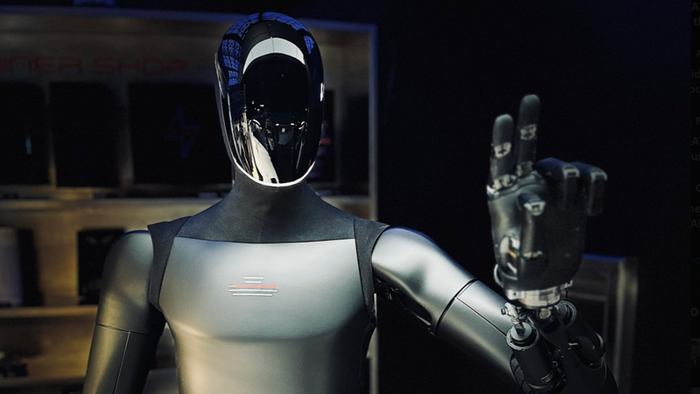
Tesla’s Fremont campus is undergoing a swift transformation, as JPMorgan analyst Rajat Gupta observed during a recent walkthrough. The former assembly lines for the Model S and Model X are being dismantled and replaced with equipment dedicated to the Optimus humanoid robot, with the company aiming to complete a four‑month conversion after ending S/X production in May. Early Optimus units are expected to appear at the “Optimus Academy” in the latter half of 2026 for training and data collection, followed by internal factory use and potential external sales as early as the second half of 2027.
Asian Retail Momentum
Retail investment across Asia continues to cluster around newly listed, high‑beta stocks, most prominently Chinese robotics firm Unitree, which surged after its dramatic Shanghai debut. The frenzy surrounding physical AI underscores Beijing’s accelerating ambition to lead the humanoid market.
JPMorgan Insight from Tesla’s Fremont Plant
Gupta and his team spent time inside the roughly 5‑million‑square‑foot Fremont facility, noting that the area earmarked for Optimus assembly was covered with tarps at the time of the visit. He told clients that Tesla remains “largely on schedule” for the targeted four‑month shift after ceasing Model S and Model X production in May. The first batch of Optimus robots will be deployed at the Optimus Academy in H2 2026, where they will collect real‑world training data before being rolled out internally and possibly sold externally by H2 2027.
The analyst added that, based on the tour, his confidence in the robotaxi fleet ramp‑up through late 2026 and early 2027 has strengthened, and that the Optimus schedule of performance (SoP) still aligns with previously communicated timelines. He described the near‑term outlook for demand drivers and Full‑Self‑Driving (FSD) adoption as “constructive.”
Facility Overview
Tesla’s Fremont plant serves as the primary hub for testing and launching both new vehicles and humanoid robots. It currently produces premium Model Y variants and performance‑grade Model 3 versions, while the recently retired Model S and X lines—shut down in early May—are being supplanted by Optimus production lines. The site showcases Tesla’s extensive automation, featuring a suite of custom‑built robots and proprietary software that boost manufacturing speed and precision.
Production still takes place under several modernized tents originally erected during the “production hell” period of the Model 3 rollout. During the visit, the team observed gigapress machines, stamping operations, and general assembly lines, and participated in FSD demonstrations involving the Model Y L variant and the Cybertruck.
Giga‑Casting and Stamping Innovations
Tesla’s giga‑casting technique, first introduced with the Model Y, merges about 70 separate under‑body components into a single cast, dramatically simplifying the assembly process and cutting the number of welding‑line robots required. As a result, the Model Y’s production line uses roughly 300 robots, compared with approximately 1,000 for the Model 3. Tesla attributes this efficiency to its materials‑science expertise, including a bespoke aluminum alloy developed in partnership with SpaceX.
For stamping, the company employs Schuler presses equipped with six progressive, interchangeable dies. Tesla stamps around ten visible vehicle components in‑house, while hundreds of additional stamped parts continue to be sourced from external suppliers.
Unboxed Manufacturing and Production Strategy
Tesla has highlighted its “unboxed” manufacturing approach for the Cybercab, a method that constructs large subassemblies independently and in parallel before merging them in the final assembly stage. This design permits unrestricted access from every angle, allowing multiple installation teams to work simultaneously and streamlining the overall build process.
During the visit, the team observed full‑scale FSD demonstrations featuring the Model Y L and the Cybertruck. The vehicles were shown navigating a construction zone autonomously and executing the Autopark feature with smooth precision. The range of driving modes—from the conservative “Sloth” to the aggressive “Mad Max”—was also showcased.
FSD v15 and Cybercab Roll‑Out
The acceleration of Cybercab production is closely linked to the launch of FSD v15. Executives expressed confidence that the new software’s validation and the unboxed manufacturing timeline are progressing in tandem. They noted that the fleet rollout schedule will largely hinge on the upcoming v15 release later in the year. Tesla deliberately postponed adding Model Y units to the robotaxi fleet, underscoring its belief that the Cybercab can be scaled rapidly enough to meet demand.
FSD v15 is described by management as a “step change” in performance, comparable to the leap from v13 to v14. The update increases the number of parameters, expands the context window, and delivers an approximate 20 % reduction in latency. Of the seven core technologies in v15, about 40 % are currently under test in the robotaxi fleet, with early feedback being encouraging. Tesla stresses the importance of maintaining core driving reliability while introducing new features, viewing v15 as the key enabler for unsupervised FSD.
The existing AI/HW4 stack is capable of running v15, but Tesla’s newer AI4.5 compute platform is designed to meet growing compute and memory demands as robotaxi models expand and context windows lengthen. AI4.5 delivers roughly 10 % more floating‑point operations per second and doubles memory capacity compared to its predecessor.
Robotaxi Economics and Future Vision
Tesla reports that the robotaxi economics for the Model 3 and Model Y remain attractive, with total ownership costs around $0.60 to $0.70 per mile when used at typical personal‑vehicle utilization levels. At four to five times higher utilization rates—typical for robotaxi operations—those costs drop to about $0.50 to $0.60 per mile, still well below the $2.50 to $3.00 per mile charged by incumbent rideshare operators.
The company’s long‑term ambition extends beyond traditional ridesharing, which it estimates represents only a low‑single‑digit share of the overall mobility market. Tesla aims to develop a purpose‑built robotaxi platform that could reduce ownership costs to roughly $0.30 per mile. Management emphasized that the Cybercab is merely the first form factor, with additional vehicle types expected to follow as the platform evolves. The Robovan demonstration presented on October 10 was cited as an example of this broader vision.
Optimus Development and Deployment
Tesla’s humanoid robot, Optimus, is slated to reach the start‑of‑production (SoP) stage within the next few months, with commercial deliveries potentially beginning in the second half of 2027. Although the company has not yet begun operating any Optimus units on the Fremont assembly line, it has confirmed that the construction of production lines for the robot is largely on schedule. These lines were set up in the wake of the discontinuation of the Model S and Model X production, which ceased in May 2026, and the company aims to complete the transition in roughly four months.
Early applications are expected to focus on repetitive, hazardous tasks such as stamping and body‑in‑white operations, where the robot’s capabilities can be leveraged most immediately. In contrast, the final general‑assembly process still demands human dexterity and is therefore projected to see humanoid involvement at a later stage.
The initial deployment plan involves training the robots at the Optimus Academy in the second half of 2026. There, the units will interact with real‑world environments, accelerating Tesla’s data‑collection cycle. After this training phase, the robots will be introduced to internal factory operations to gather additional data while avoiding complications associated with third‑party datasets. Commercial sales to external customers are expected to commence as early as 2H27.
Tesla has aligned its humanoid data strategy with its full‑self‑driving (FSD) program, insisting on retaining data ownership internally rather than depending on external sources. This approach is intended to preserve a competitive edge over time. In the first half of 2026, the company reported a roughly 100 % increase in compute capacity compared to the same period a year earlier.
The design of Optimus has now reached a finalised stage, although aesthetic details remain under development. This milestone signals Tesla’s commitment to scaling production volumes over the long term. The company aims to produce approximately one million units at the Fremont facility, with a broader target of around ten million units at Giga Texas. The Gen 3 model will be unveiled closer to the SoP to protect competitive advantages, while the specifications for Gen 4—including its capabilities, cost, and scalability—will be guided by field experience with Gen 3.
Demand Momentum and the Role of FSD
Tesla attributes the recent surge in vehicle demand to advances in FSD technology and the introduction of new model variants. Management of publicly traded franchised dealerships has indicated that the rise in gasoline prices, a consequence of the Middle East conflict, has not materially influenced battery‑electric vehicle demand. Instead, the company credits progress in FSD and a refreshed model lineup for the uptick.
In the second quarter of 2026, unit sales rose 25 % year‑over‑year and 34 % sequentially, marking the largest quarter‑over‑quarter increase since 2019. The launch of new base variants, the Model Y L, and updated performance models broadened Tesla’s product offering, enabling it to serve a wider array of use cases and price points. FSD has become the focal point of the portfolio, with enhanced functionality generating additional customer interest. Management noted an increasing trend of showroom visitors specifically to learn about FSD, a pattern mirrored in international markets such as Australia and South Korea, and early European sales data also reflect a significant shift following the FSD rollout.
Europe FSD Approval Strategy
Tesla is pursuing a dual‑track approach to obtain FSD approval across Europe. The company is engaging directly with the European Union, where approval timelines have been repeatedly postponed and are now projected for October. Simultaneously, Tesla is working with individual member states—most notably the Netherlands—whose regulatory frameworks could be adopted by other EU countries.
Early driving data from Europe is encouraging, showing safety metrics that include roughly five times fewer collisions over approximately 65 million kilometres of FSD‑enabled driving. Management believes these results are gradually building regulatory momentum. Once approval is secured, Tesla expects activation in European markets to occur swiftly, measured in weeks rather than months or quarters.
FSD Pricing and Monetization Strategy
Tesla’s approach to Full‑Self‑Driving (FSD) pricing is still evolving, but the company views it as a substantial long‑term revenue driver. The shift from one‑time purchases to a subscription‑only model is intended to preserve flexibility while capturing the growing value of ongoing software enhancements. Management highlighted that roughly half of Tesla owners have never activated FSD, and a significant portion of those who previously accessed older iterations have yet to switch to new subscriptions. To encourage adoption, Tesla offers a one‑month free trial to every new customer and keeps the subscription fee around $99 per month.
Automotive Gross Margins and Production Scale
Tesla reported targeted price adjustments for specific Model Y variants and a wider range of Model 3 models worldwide to mitigate commodity‑cost pressures. Interest‑rate subsidies are also expected to relieve some margin strain. The company noted that gross margins in the first two quarters of 2026 were modestly impacted by the transition to subscription‑based FSD monetization, as the final U.S. and Canadian upfront FSD sales concluded in February 2026, with a phased exit from other markets by August 2026.
A ramp‑up in cathode and anode production began in January 2026, anticipated to gradually lower cost of goods sold. Tesla cautioned that a plant typically requires about 18 months to reach optimal scale and utilization, and the precise cost savings may be obscured by other concurrent changes. Overall, the firm maintains a strategy focused on expanding revenue while leveraging its significant production capacity, targeting up to three million vehicles in 2026—well above JPMorgan’s estimate of roughly 1.8 million deliveries.
Humanoid Production Outlook
The humanoid robot initiative is not expected to generate immediate commercial returns. Analysts project that production could become viable in the latter half of 2027 as series manufacturing scales and external sales commence. The broader robotics competition between Western firms and Chinese competitors, notably Tesla and Unitree, is set to intensify, with both parties preparing to increase factory output and deliver commercial units over the next twelve months.
Supply Chain Challenges
Western manufacturers face a critical supply‑chain bottleneck. China currently dominates the production of many components essential to humanoid construction—including rare‑earth elements, permanent magnets, actuators, electric motors, and optical systems. Although Tesla may spearhead the Western commercialization effort, the United States could end up building its humanoid industry on a supply chain that Beijing can restrict, echoing current constraints on materials such as tungsten and germanium. For a deeper dive into these supply‑chain dynamics, the full report is available here.
Professional subscribers can access additional analysis on humanoid timelines and delivery schedules through our new Marketdesk.ai portal.
In sum, Tesla is navigating a complex landscape of evolving software monetization, margin pressures, ambitious production scaling, and strategic supply‑chain considerations—all while positioning itself for future growth in both automotive and robotics sectors.