
KLCI Slips on Friday as Sector Divergence Keeps Gains in Check
The Malaysian equity market recorded its second consecutive daily decline, shedding roughly 15 points—or about one percent—across the two sessions. The Kuala Lumpur Composite Index (KLCI) now rests just above the 1,620-point level, and traders will be watching to see whether Monday's trade can halt the recent slide.
On Friday, the index edged lower by 2.04 points, or 0.13 percent, closing at its session low of 1,621.24 after touching an intraday high of 1,627.62. The session was defined by a tug-of-war between sectors: weakness in financials, telecommunications, and industrials was partially offset by strength in the plantations complex.
Among the most actively traded names, the picture was mixed. Axiata and MISC each gave back 0.88 percent, while Celcomdigi slipped 0.30 percent. On the positive side, CIMB Group added 0.49 percent, IOI Corporation climbed 1.03 percent, Kuala Lumpur Kepong rose 0.27 percent, Maxis jumped 1.42 percent, MRDIY gained 0.93 percent, Petronas Chemicals and QL Resources each advanced 0.41 percent, PPB Group rose 0.85 percent, SD Guthrie picked up 0.60 percent, Sunway added 0.65 percent, Telekom Malaysia gathered 0.31 percent, and Tenaga Nasional edged higher by 0.28 percent.
Declines were broader in the financial and conglomerate space: Genting fell 2.03 percent, Genting Malaysia dropped 0.89 percent, IHH Healthcare lost 0.55 percent, Maybank slipped 0.76 percent, Press Metal shed 0.43 percent, Public Bank eased down 0.22 percent, RHB Bank fell 0.52 percent, YTL Corporation plunged 2.84 percent, and YTL Power tumbled 2.99 percent. Nestle Malaysia was virtually flat at -0.02 percent, while Sime Darby, Petronas Dagangan, and Hong Leong Bank closed unchanged.
Wall Street Posts Record Closes on Election and Rate-Cut Tailwinds
The backdrop from U.S. equities is decidedly positive. All three major U.S. indices opened higher on Friday and finished at fresh record closing levels. The Dow Jones Industrial Average gained 259.65 points, or 0.59 percent, to settle at 43,988.99. The Nasdaq Composite added 17.32 points, or 0.09 percent, to close at 19,286.78, while the S&P 500 rose 22.44 points, or 0.38 percent, to end at 5,995.54.
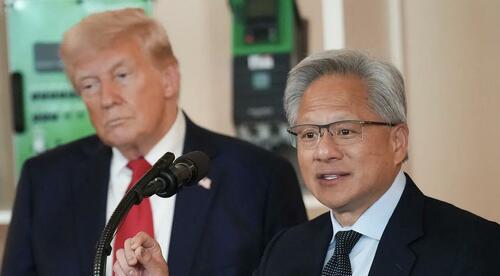
The weekly performance was even more striking: the technology-heavy Nasdaq surged 5.7 percent, the S&P 500 climbed 4.7 percent, and the Dow rallied 4.6 percent. Investors have been buoyed by the decisive presidential victory of former President Donald Trump, a result widely viewed as favorable for corporate earnings and capital markets.
Equally important, market participants continued to process the Federal Reserve's widely anticipated decision on Thursday to trim its benchmark interest rate by 25 basis points. Fed Chair Jerome Powell, however, cautioned that monetary policy is not on a predetermined trajectory, emphasizing that the central bank will evaluate each future decision on a meeting-by-meeting basis.
Oil Softens on Weak Chinese Demand Signals; Asia Faces a Mixed Outlook
Energy markets moved in the opposite direction. Oil prices dropped sharply on Friday amid concerns over global demand, triggered by data revealing a decline in China's oil imports and a broader sense of disappointment over the scale of Beijing's new stimulus package. West Texas Intermediate crude futures for delivery in December fell $1.98, or 2.7 percent, to $70.38 per barrel, though the contract still managed a 1 percent gain for the week.
Looking ahead to Monday's session in Kuala Lumpur, the global picture for Asian equities remains mixed. European markets closed lower, while U.S. bourses finished at record highs, leaving Asian exchanges positioned somewhere in between. For Malaysian traders, the key question is whether the positive Wall Street momentum—bolstered by election clarity and a lower U.S. rate environment—will be enough to reverse the KLCI's two-day losing streak, or whether softening commodity demand and regional caution will keep the index under pressure.